Clinical & Translational Research
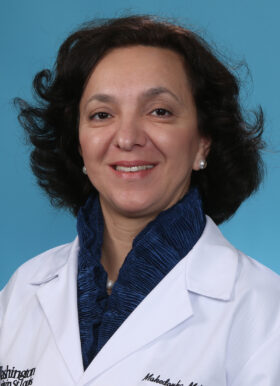
Makedonka Mitreva, PhD
The Robert E. and Louise F. Dunn Professor of Medical Sciences, Departments of Medicine and Genetics
- Phone: 314-286-2005
- Fax: 314-286-1810
- Email: mmitreva@wustl.edu
Dr. Mitreva is an internationally acclaimed scientist who leads a basic and translational research program studying neglected tropical diseases, specifically helminth infections. Her enduring dedication to enhancing omics-driven discoveries and their clinical applications is paving the way for long-lasting improvements in global health.

Ekansh Mittal, PhD
Assistant Professor of Medicine
- Email: emittal@wustl.edu
Dr. Mittal specializes in the intricate dynamics of host-pathogen interactions, with a particular emphasis on the innate immune response to Mycobacterium tuberculosis (Mtb).
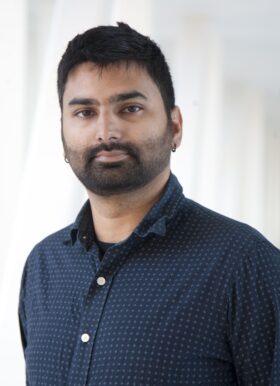
Aaloke Mody, MD
Associate Professor of Medicine
- Phone: 3144548215
- Email: aaloke.mody@wustl.edu
His overarching research interests are in utilizing implementation science and epidemiologic methods to better understand how to deliver high-quality and patient-centered HIV care in routine practice resource-limited settings
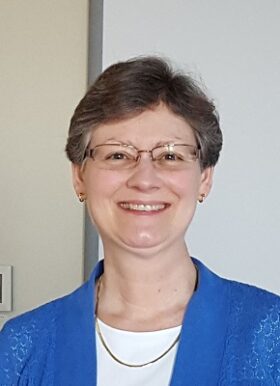
Margaret A. Olsen, PhD, MPH
Statistical Data Analyst III
- Phone: 314-454-8215
- Fax: 314-454-5392
- Email: molsen@wustl.edu
Dr. Olsen’s primary research interests involve the epidemiology of hospital-acquired infections, particularly surgical site infection, and the use of administrative and claims data to study surgical complications.

Patrick D. Olson, MD, PhD
Instructor of Medicine
- Email: olsonp@wustl.edu
Areas of Interest in ID:
Host pathogen interaction in bacterial pathogenesis
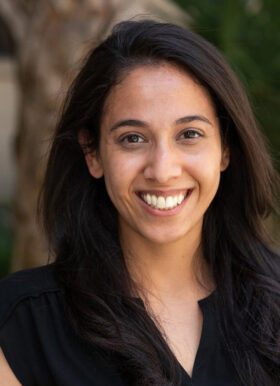
Priya Pal, MD, PhD
Instructor in Medicine
- Email: priyapal@wustl.edu
Dr. Pal specializes in HIV basic science and translational research. She additionally runs an HIV cure trial out of the Infectious Disease clinical research unit (ID-CRU) and serves on the inpatient infectious disease consult service.
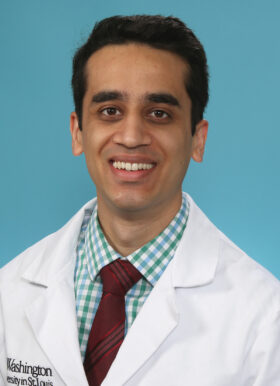
Anupam Pande, MD, MPH, FIDSA
Associate Professor of Medicine
- Phone: 314-454-8354
- Fax: 314-454-5392
- Email: apande@wustl.edu
Dr. Pande specializes in the care of transplant recipients, with a special focus on opportunistic infections and antimicrobial prophylaxis in bone marrow transplant recipients.
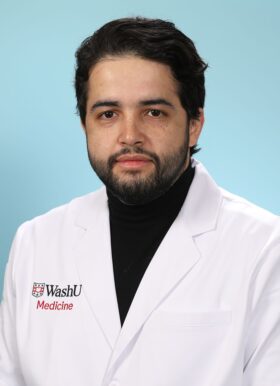
Luis Parra-Rodriguez, MD
Assistant Professor of Medicine
- Email: lparra-rodriguez@wustl.edu
Dr. Parra-Rodriguez specializes in the longitudinal clinical care of people with HIV, with a special clinical research focus on aging, age-related clinical conditions, and mental health in people with HIV.

Jennifer A. Philips, MD, PhD
Theodore and Bertha Bryan Professor, Departments of Medicine and Molecular Microbiology; Co-Chief, Infectious Diseases Division
- Phone: 314-747-8058
- Email: philips.j.a@wustl.edu
Dr. Philips is principal investigator of an NIH-funded lab that studies how Mycobacterium tuberculosis evades the host immune response.

Marilia R. Pinzone, MD
Instructor of Medicine
- Email: marilia@wustl.edu
Dr. Pinzone’s interests are HIV, TB and viral infections in immunocompromised hosts.
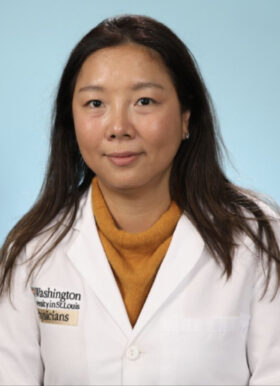
Nongnooch Poowanawittayakom, MD
Assistant Professor of Medicine
- Email: nongnooch@wustl.edu
Dr. Poowanawittayakom interests are in bone and joint infection, infection prevention/control, hepatitis C, emerging infectious diseases, and global health.
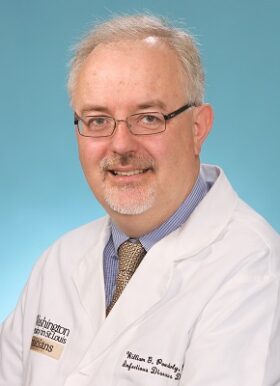
William G. Powderly, MD
J. William Campbell Professor of Medicine
- Phone: 314-454-8287
- Fax: 314-454-8294
- Email: wpowderly@wustl.edu
Dr. Powderly has been actively involved in HIV-related clinical research for over thirty years with specific interests in opportunistic infections, metabolic complications and long-term outcomes of antiretroviral therapy.
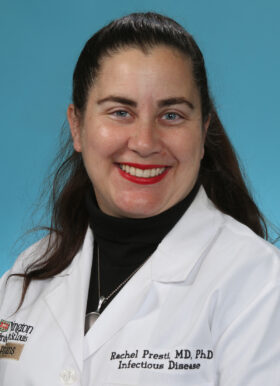
Rachel M. Presti, MD, PhD
Professor, Infectious Diseases | Medical Director of the Infectious Disease Clinical Research Unit (IDCRU)
- Phone: 314-454-8215
- Fax: 314-454-5392
- Email: prestir@wustl.edu
Dr. Presti specializes in clinical and translational research in infectious disease, with a special focus on HIV, SARS-CoV-2 and other viral infections.
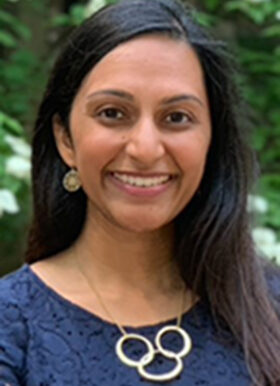
Aditi Ramakrishnan, MD, MSc
Assistant Professor of Medicine
- Email: aditir@wustl.edu
Dr. Ramakrishnan’s research focuses on applying implementation science strategies to improve domestic HIV prevention and care, particularly for cisgender women.
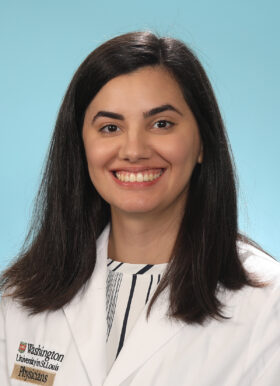
Adriana M. Rauseo, MD
Assistant Professor of Medicine
- Phone: 314-454-8254
- Email: a.rauseoacevedo@wustl.edu
Dr. Rauseo specializes in clinical infectious diseases, with a special focus on mycology and infectious that affect immunocompromised hosts. Since the outset of the COVID-19 pandemic she has served as an investigator in the Infectious Disease Clinical Research Unit (ID-CRU) in multiple clinical trials and translational research in the fight against COVID-19.
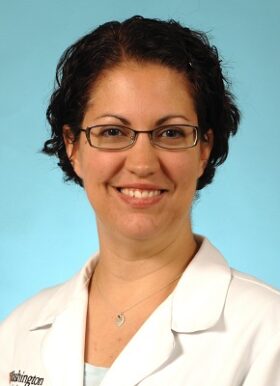
Hilary E.L. Reno, MD, PhD
Professor of Medicine
- Phone: 314-454-8354
- Fax: 314-454-5392
- Email: hreno@wustl.edu
Dr. Reno specializes in sexual health care, with a special focus on the clinical care of sexually transmitted infections (STI) and the intersection with HIV prevention.

Bruce A. Rosa, PhD
Associate Professor of Medicine
- Phone: 314-273-5550
- Email: barosa@wustl.edu
Dr. Rosa’s experience in the statistical analysis of complex datasets (utilizing multiple types of evidence spanning treatments or species) has led to the identification differentially expressed genes, drug targets and pathways of interest for experimental verification.
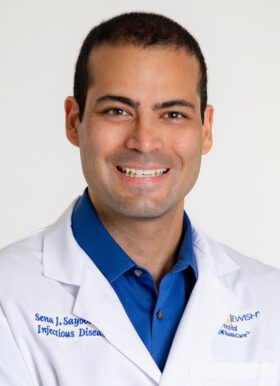
Sena Sayood, MD
Assistant Professor of Medicine
- Phone: 314-454-8254
- Email: sjsayood@wustl.edu
Dr. Sayood performs clinical research with a specific focus on antimicrobial stewardship and clinical decision support.
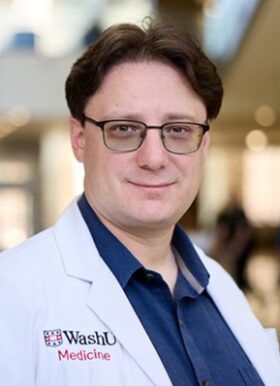
Andrej Spec, MD, MSCI
Associate Professor of Medicine
- Phone: 314-454-8354
- Fax: 314-454-5392
- Email: aspec@wustl.edu
Dr. Spec‘s research is in fungal infections, particularly in immunocompromised patients, including those with transplants. His research focuses on Cryptococcus, Histoplasma, Candida, Aspergillus and other invasive molds. Dr. Spec also runs the division’s clinic focusing on invasive fungal infections, where he takes care of both immunocompromised and immunocompetent patients with fungal infections, which he considers the best and most rewarding part of his job.

Abby Sung, MD
Assistant Professor of Medicine (PEFA)
- Email: ASUNG@WUSTL.EDU
Dr. Sung recently completed a two year fellowship in ID. She will continue to stay on in ID to continue her work on outpatient infection prevention, occupational health and medical education.
Why did you choose WashU for your ID fellowship?
I chose WUSM for fellowship training because of: the flexibility in career paths (very accommodating for people who don’t know what specific realm of ID they want to pursue), the abundant research opportunities, the awesome people, being able to walk to work, the giant hospital with its wide array of disease pathology and large referral radius.