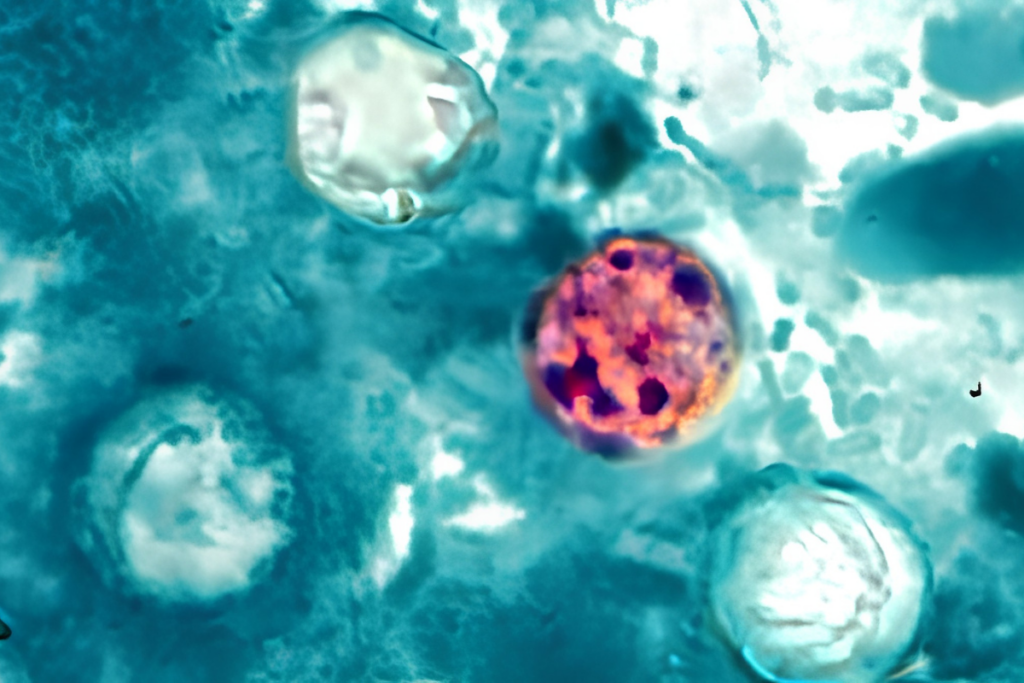
The Centers for Disease Control and Prevention is working with state and federal partners to investigate several outbreaks of cyclosporiasis, a gastrointestinal disease caused by the microscopic parasite Cyclospora cayetanensis. In a health alert published July 14, the CDC reported 1,645 known cases of cyclosporiasis nationwide May to July of 2026. The primary symptom of an infection is watery diarrhea. While imported produce has been linked to past cyclosporiasis outbreaks, investigators have yet to identify the source(s) of the current epidemic.

James M. Fleckenstein, MD, a Professor of Medicine in the Division of Infectious Diseases and Professor of Molecular Microbiology at WashU Medicine, said that one of the reasons it’s hard to determine a source is the length of time between a cyclosporiasis infection and symptoms.
“It can be days, but in some cases up to two weeks, and that’s part of the problem in pinning it down the source of the epidemic,” Dr. Fleckenstein said during a recent interview with KMOV. “Patients, by the time they become symptomatic, they may not recognize what caused them to become ill.”
Reducing risk of infection
Until a source is pinpointed, thoroughly washing all fruits and vegetables is key to reducing the risk of infection. “Virtually, any fresh produce could potentially be infected,” Dr. Fleckenstein said. He added that while cooking food and washing with soap can destroy or remove the germs that cause cyclosporiasis, alcohol-based sanitizers do not seem to be effective.
Diagnosis & treatment
Dr. Fleckenstein said you should see your healthcare provider if you are experiencing prolonged diarrhea. A Cyclospora infection is diagnosed by examining stool specimens. Cyclosporiasis is treated with antibiotics. Without treatment, symptoms can last anywhere from a few days to a month or longer. Watch Dr. Fleckenstein’s full interview with KMOV.