Hookworms, intestinal parasites that infect hundreds of millions of people in under-resourced tropical regions around the globe, have evolved to survive inside the human gut for years, secreting molecules that enable co-existence with their hosts. Now, researchers at Washington University School of Medicine in St. Louis have harnessed that biological mechanism for potential human benefit, engineering a hookworm to produce and deliver a drug within a living host.
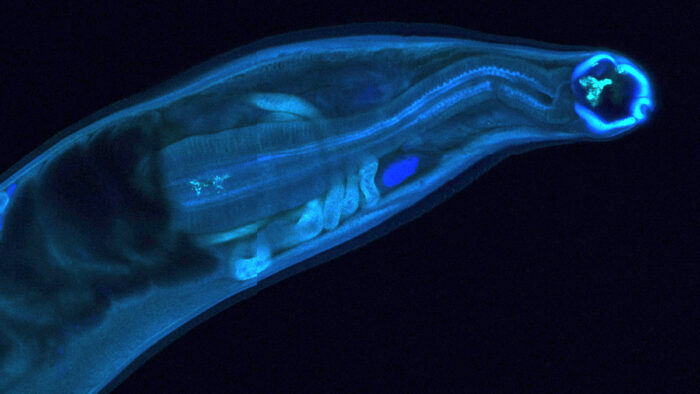
In a new study, the team reports the first successful genetic modification of the human hookworm. It was designed to produce an antibody that neutralizes tetrodotoxin, a deadly neurotoxin produced by pufferfish and other marine animals. This proof-of-concept could lead to long-lasting treatments for chronic disease or exposure to toxins in remote settings.
Makedonka Mitreva, PhD, the Gordon R. Miller Professor in the John T. Milliken Department of Medicine’s Division of Infectious Diseases at WashU Medicine, served as senior author of the new study. The findings were published June 3 in Nature Communications.
Learn including how bioengineered parasites could serve as long-term drug factories for human hosts » School of Medicine News Release