Division Announcements

Discovery of viral entry routes into cells points to future prevention, treatment strategies

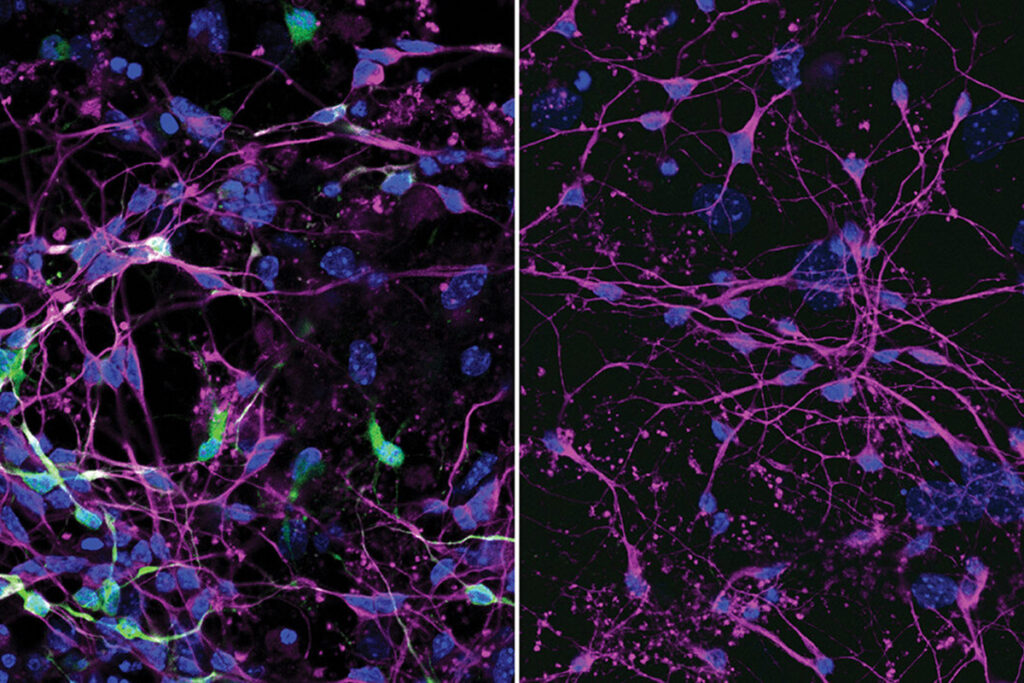
Researchers at WashU Medicine have identified key entry routes that two deadly viruses use to infect cells. Shown are mouse neurons and their cell nuclei (purple and blue). On the left, infection with tick-borne encephalitis virus is visible in green. On the right, mouse neurons missing a key entry receptor are protected from infection, showing no green. Strategies that disrupt these entry routes could help guide development of new ways to prevent or treat these viral infections. (Image: Pengfei Li, Hana Janova/WashU Medicine)
View Content

Decoy molecules to newly identified receptors prevent deadly viral infections in mice

Researchers at Washington University School of Medicine in St. Louis have identified central routes that two deadly viruses take to invade human cells and have designed decoy molecules that block the infections.